



As hydrogen-ready gas turbines move from pilot projects to sovereign-scale energy infrastructure, risk signals are becoming harder for executives to ignore.
This industry news for decision makers examines the technical, regulatory, and investment pressures shaping 2026, from combustion instability to asset bankability.
For energy ministers, utility CTOs, and infrastructure investors, the central question is no longer whether hydrogen turbines work.
The higher-value question is whether they can be scaled safely, financed confidently, and integrated without weakening grid resilience.
The 2026 Executive Signal: Hydrogen Turbines Are Bankable Only When Risk Is Engineered Early
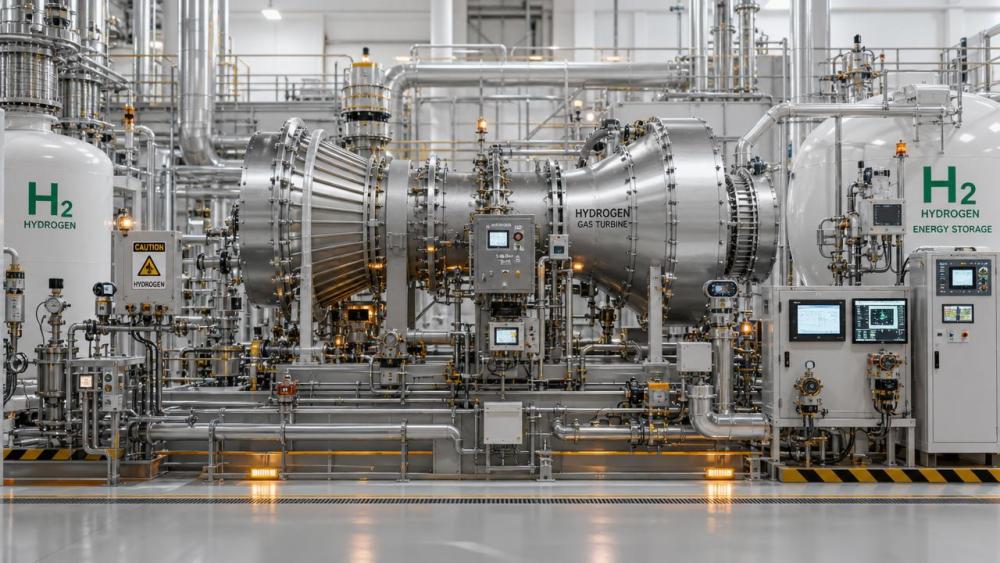
The strongest 2026 signal is clear: hydrogen-ready turbines are moving from innovation budgets into national infrastructure portfolios.
That shift changes the risk profile from technology demonstration to sovereign reliability, insurance exposure, and long-term operational accountability.
Executives should not interpret “hydrogen-ready” as a single technical status or a simple procurement label.
In practice, it describes a moving envelope of fuel flexibility, combustion controls, materials tolerance, and emissions performance.
The business risk emerges when project teams treat that label as a guarantee rather than a qualification requiring verification.
For decision makers, the issue is not avoiding hydrogen turbines, but avoiding poorly specified hydrogen turbine programs.
Projects that define fuel pathways, blending milestones, maintenance assumptions, and safety standards early will attract stronger capital confidence.
Projects that defer those questions until commissioning may face redesign costs, insurance friction, and political scrutiny.
Combustion Instability Is the First Operational Risk to Watch
Hydrogen burns faster than methane, which makes turbine combustion more sensitive to flame speed, temperature gradients, and acoustic instability.
This does not make hydrogen turbines unsuitable, but it changes the engineering discipline required for commercial reliability.
Executives should ask whether the turbine design has been validated at the expected hydrogen percentage, not only at laboratory conditions.
Blending limits remain one of the most misunderstood risk signals in 2026 energy infrastructure planning.
A turbine capable of 30 percent hydrogen blending by volume may not deliver proportional decarbonization by energy content.
This matters for corporate emissions claims, national carbon accounting, and the economic value of avoided fossil fuel use.
Combustion instability can also influence outage frequency, warranty boundaries, and the credibility of dispatch commitments to grid operators.
For utility CTOs, the right diligence question is whether combustion behavior is proven across load changes and seasonal fuel variability.
Materials Fatigue Could Become the Hidden Cost Center
Hydrogen infrastructure risk is rarely limited to the turbine combustor, because fuel systems, valves, seals, and pipelines also face exposure.
Hydrogen embrittlement, leakage behavior, and thermal cycling can influence asset life more quietly than headline efficiency metrics.
Decision makers should examine whether balance-of-plant components are qualified under relevant hydrogen service assumptions.
Standards such as ASME B31.12 provide important guidance, but compliance must be matched to real operating profiles.
A paper-compliant system may still create lifecycle risk if pressure cycles, impurity levels, or inspection intervals are underestimated.
Material selection affects not only safety but also asset availability, spare parts strategy, and maintenance contract pricing.
Investment directors should treat materials integrity as a financial variable, not only as an engineering detail.
If fatigue assumptions are wrong, project economics can deteriorate through unplanned outages and accelerated component replacement.
Hydrogen Quality and Supply Reliability Are Becoming Board-Level Issues
Hydrogen turbine economics depend on more than turbine capability; they depend on dependable access to suitable hydrogen at acceptable cost.
Large-scale electrolysis projects, storage assets, and transport networks are not maturing at the same speed in every region.
This creates a mismatch between turbine procurement schedules and actual availability of low-carbon hydrogen supply.
Executives should test whether fuel supply contracts are aligned with turbine ramp-up assumptions and grid dispatch requirements.
Hydrogen purity also matters because contaminants can affect combustion performance, materials behavior, and downstream maintenance needs.
A strategy based on future green hydrogen availability must include contingency plans for blending, storage, and pricing volatility.
For national energy planners, fuel sovereignty is becoming as important as turbine technology itself.
A hydrogen turbine without secure fuel logistics may become a stranded flexibility asset rather than a decarbonization engine.
Safety Standards Are Tightening, and Compliance Is No Longer a Late-Stage Task
Hydrogen safety is increasingly judged through integrated systems, not isolated equipment certifications or supplier declarations.
Executives must understand how standards, permitting authorities, and insurers interpret risk across production, storage, compression, and power generation.
References such as ISO 19880, SAE J2601, and ASME B31.12 influence adjacent hydrogen infrastructure decisions.
Even when a turbine project is not a refueling station, cross-sector standards affect expectations for pressure management and emergency design.
Safety cases should address ventilation, detection, isolation, ignition control, emergency response, and operator training.
The practical question is whether the project can demonstrate safe operations under abnormal but credible scenarios.
Regulators are becoming less tolerant of vague risk documentation as hydrogen projects become larger and politically visible.
Early engagement with authorities can reduce permitting delays and prevent expensive redesign during late-stage project development.
Carbon Claims Must Survive Financial and Regulatory Scrutiny
Hydrogen-ready power assets are often justified through decarbonization narratives, but carbon value depends on fuel origin and utilization rate.
Burning hydrogen produced from carbon-intensive sources can weaken the emissions case unless paired with credible CCUS infrastructure.
For corporate boards, the risk is reputational as well as regulatory, especially where sustainability-linked financing is involved.
Claims about zero-carbon power should be tied to verifiable hydrogen supply, lifecycle accounting, and transparent emissions boundaries.
Investors will increasingly ask whether a hydrogen turbine can maintain value under stricter disclosure regimes.
This includes scrutiny of upstream electricity sources, electrolyzer performance, transport losses, storage boil-off, and backup fuel usage.
Projects that cannot defend their carbon accounting may struggle to access premium green capital.
In 2026, decarbonization credibility is becoming a measurable component of asset bankability.
What Decision Makers Should Require Before Approving Capital
A robust hydrogen turbine investment case should begin with a fuel pathway, not with turbine selection alone.
Boards should require a staged roadmap showing expected blending levels, fuel availability, infrastructure upgrades, and emissions outcomes.
The commercial model should include sensitivity analysis for hydrogen price, capacity factor, maintenance cost, and regulatory delay.
Procurement teams should compare supplier claims against independent testing, reference projects, and contractual performance guarantees.
Warranty terms deserve particular attention because hydrogen operation may introduce exclusions related to fuel quality or operating envelope.
Executives should also review whether insurance coverage reflects the actual hydrogen concentration and storage configuration.
A strong approval package will connect engineering risk, financial exposure, and strategic value in one decision framework.
That framework helps leaders avoid both excessive caution and premature commitment to underdeveloped infrastructure.
Where Hydrogen Turbines Make the Strongest Strategic Sense
Hydrogen turbines are most compelling where power systems need dispatchable low-carbon capacity alongside variable renewable generation.
They may also support industrial clusters with nearby electrolysis, hydrogen storage, or CCUS-linked production facilities.
Regions with existing gas turbine expertise and adaptable pipeline corridors may capture transition advantages faster.
However, projects in isolated locations with weak hydrogen logistics may face higher delivered fuel costs and operational uncertainty.
The best use case is not simply replacing every gas turbine with a hydrogen-ready unit.
It is placing flexible generation where hydrogen infrastructure, grid needs, and decarbonization incentives intersect.
For energy ministers, this means aligning turbine deployment with national hydrogen corridors and industrial demand centers.
For investors, it means favoring assets embedded in credible ecosystems rather than stand-alone technology bets.
Early Warning Indicators to Monitor in 2026
Several risk signals deserve regular executive monitoring as hydrogen turbine programs advance through procurement and construction.
The first is supplier language that avoids precise hydrogen blending percentages, operating conditions, or validated emissions performance.
The second is a project schedule that assumes hydrogen supply will arrive exactly when turbine commissioning begins.
The third is a permitting plan that treats hydrogen safety documentation as a routine add-on rather than a core workstream.
The fourth is an economic model with limited downside cases for fuel price, component replacement, or reduced dispatch.
The fifth is a governance structure where engineering, finance, safety, and public policy teams operate in silos.
These signals do not automatically mean a project should be cancelled, but they indicate where executive intervention is needed.
In complex infrastructure, timely correction is often cheaper than late-stage technical optimism.
Conclusion: The Winning Strategy Is Disciplined Adoption, Not Delay
Hydrogen-ready gas turbines remain strategically important for zero-carbon power systems, especially where dispatchable capacity is essential.
Yet 2026 industry news for decision makers points to a more demanding phase of market development.
The winners will not be organizations that accept the most optimistic supplier narrative or wait for perfect certainty.
They will be the institutions that convert risk signals into disciplined specifications, staged investment, and transparent governance.
Combustion stability, materials integrity, fuel logistics, safety standards, and carbon accounting must be assessed together.
When those factors are managed early, hydrogen turbines can become resilient infrastructure rather than speculative assets.
For ministers, CTOs, and global investors, the 2026 mandate is practical: scale hydrogen power with ambition, but underwrite it with evidence.