Policy Updates Shaping Hydrogen Blending Projects




As hydrogen blending moves from pilot programs to bankable infrastructure, policy updates are becoming decisive indicators of project viability, compliance risk, and long-term asset value.
For business evaluators, understanding how new safety codes, tariff mechanisms, emissions accounting rules, and gas network regulations affect blending ratios and investment timelines is essential.
This article examines the latest regulatory shifts shaping hydrogen blending projects and explains what they mean for strategic planning, technical due diligence, and zero-carbon infrastructure decisions.
Policy Updates Shaping Hydrogen Blending Projects: What Is Changing Now?
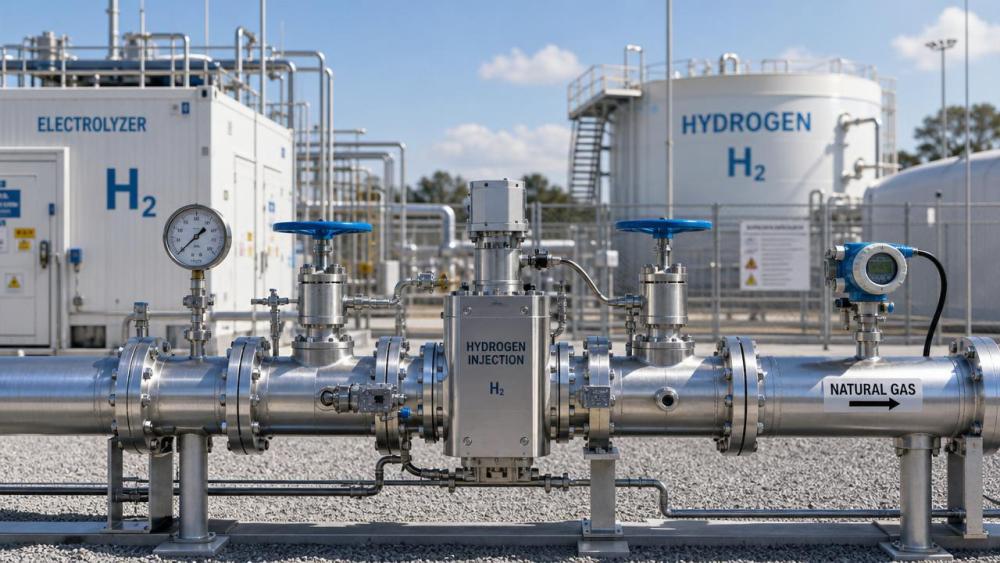
Hydrogen blending combines hydrogen with natural gas inside existing pipeline networks, turbines, boilers, or distribution assets.
The concept is not new, but policy updates are changing its commercial meaning.
Earlier projects often treated blending as a technical demonstration. Current rules increasingly treat it as regulated infrastructure.
That shift affects safety approval, cost recovery, emissions claims, gas quality standards, and cross-border certification.
For G-HEI, hydrogen blending sits between legacy gas systems and sovereign zero-carbon infrastructure.
It connects electrolysis output, pipeline integrity, hydrogen-ready turbines, CCUS planning, and high-pressure distribution strategy.
The most important policy updates are moving in five directions:
- Clearer limits on allowable blending percentages.
- More rigorous pipeline material and safety verification.
- New methods for proving carbon intensity reductions.
- Tariff models that decide who pays for upgrades.
- Rules linking blending projects with future pure hydrogen corridors.
These policy updates determine whether a project becomes a transition asset or a stranded compliance burden.
Why Do Policy Updates Matter More Than Blending Ratios Alone?
Many searches focus on whether 5%, 10%, or 20% hydrogen blending is technically possible.
That question is useful, but incomplete.
A blending ratio only creates value when policy updates allow safe operation, recognized emissions benefits, and recoverable investment.
A technically feasible blend may still fail if end-use appliances cannot accept it.
It may also fail if regulators reject emissions claims because renewable hydrogen certification is weak.
Policy updates increasingly require proof across the whole value chain.
That includes electrolyzer power sourcing, metering accuracy, pipeline embrittlement risk, odorization practices, combustion performance, and customer notification.
What should be checked first?
The first check is not the maximum blend ratio. It is the regulatory boundary condition.
Projects should confirm whether the network is transmission, distribution, industrial, isolated, or cross-border.
Each category may face different policy updates, permitting steps, and reporting duties.
For example, an industrial cluster may tolerate higher hydrogen concentrations than residential gas distribution.
A turbine test facility may need different approval than a city-gate injection point.
G-HEI benchmarking often starts with this question: does the regulation recognize the asset as transitional, strategic, or experimental?
Which Safety and Material Rules Are Reshaping Hydrogen Blending?
Safety rules are the most visible area of policy updates.
Hydrogen behaves differently from methane. It has smaller molecules, wider flammability limits, and different ignition characteristics.
Those properties make material integrity central to project approval.
Regulators are paying closer attention to steel grade, weld history, compressor seals, valves, meters, and pressure cycling.
Standards such as ASME B31.12, ISO 19880, and related pipeline integrity frameworks are becoming practical decision tools.
Policy updates often require asset-specific evidence rather than broad assumptions from pilot results.
How should integrity risk be assessed?
A reliable assessment combines documentation, testing, and operating envelope review.
Key evidence includes pipeline age, pressure class, fracture toughness, fatigue history, cathodic protection, and leak detection capability.
Where records are incomplete, policy updates may force conservative limits or additional inspections.
This can change project economics quickly.
A low-cost blending plan can become expensive if compressors, meters, or legacy pipeline sections need replacement.
However, early integrity work can protect asset value.
It helps avoid retrofits after permitting, financing, or procurement has already started.
How Are Emissions Accounting Policy Updates Affecting Project Value?
Hydrogen blending is often promoted as a decarbonization pathway.
Yet emissions value depends on how policy updates define low-carbon hydrogen and avoided emissions.
A project using renewable hydrogen from additional power may receive stronger recognition than one using grid electricity without verification.
Rules may require hourly matching, regional deliverability, guarantees of origin, or lifecycle carbon intensity calculations.
These policy updates affect revenue assumptions, public funding access, and corporate climate disclosures.
Can blending deliver strong emissions reductions?
It can, but the impact is often modest at low blend percentages.
Hydrogen has lower volumetric energy density than natural gas.
Therefore, a 10% volume blend does not equal a 10% carbon reduction.
Policy updates are making this distinction harder to ignore.
Projects should avoid overclaiming climate benefits.
Transparent calculations are better for credibility, financing, and regulatory trust.
For strategic planning, blending should be evaluated as a bridge, not a final decarbonization endpoint.
What Tariff and Market Design Changes Influence Bankability?
Bankability depends on whether costs can be allocated fairly and predictably.
Policy updates on tariffs, network access, and regulated asset bases are therefore critical.
Some jurisdictions allow hydrogen-related upgrades to enter regulated tariffs.
Others require competitive grants, private contracts, or industrial cluster cost sharing.
This difference changes investment timelines and risk allocation.
Who pays for blending infrastructure?
The answer depends on market design.
Possible cost centers include electrolyzer developers, gas network operators, industrial users, taxpayers, or final energy consumers.
Recent policy updates increasingly ask whether customers receive measurable value from blending.
If benefits are unclear, regulators may resist broad tariff recovery.
Projects linked to industrial offtake, turbine retrofits, or future hydrogen corridors may be easier to justify.
They can show system value beyond symbolic emissions reduction.
How Should Projects Compare Blending With Dedicated Hydrogen Infrastructure?
Hydrogen blending is not always the best answer.
Policy updates are increasingly separating short-term blending from long-term dedicated hydrogen networks.
This matters because infrastructure built for low-percentage blending may not support future pure hydrogen service.
A project may pass current compliance, yet still lack strategic resilience.
The comparison should include technical readiness, emissions impact, customer demand, permitting complexity, and upgrade pathways.
The strongest projects usually preserve optionality.
They use blending to build hydrogen supply, operating experience, and customer acceptance.
At the same time, they avoid locking capital into assets that cannot transition toward higher hydrogen service.
What Common Mistakes Should Be Avoided Under New Policy Updates?
The first mistake is assuming pilot success guarantees scalable approval.
Policy updates may impose stricter requirements once projects affect broader networks or public consumers.
The second mistake is treating hydrogen certification as an administrative detail.
Without credible carbon accounting, a blending project may lose policy incentives or reputational value.
The third mistake is ignoring end-use equipment.
Gas turbines, boilers, meters, burners, and household appliances may respond differently to hydrogen blends.
The fourth mistake is underestimating data requirements.
Modern policy updates often require real-time monitoring, traceable metering, safety reporting, and documented emergency response protocols.
Practical readiness checklist
- Map every applicable policy update before design freeze.
- Verify pipeline integrity against hydrogen exposure scenarios.
- Confirm emissions accounting rules before claiming reductions.
- Align tariff strategy with documented system benefits.
- Test critical end-use equipment under realistic operating conditions.
- Design monitoring systems for regulatory reporting and incident prevention.
FAQ: How Should Policy Updates Be Interpreted in Project Planning?
Conclusion: Turning Policy Updates Into Investment-Grade Decisions
Hydrogen blending projects now depend on more than engineering confidence.
Policy updates define the operating envelope, investment case, emissions value, and future upgrade pathway.
The best approach is to treat regulation as an early design input, not a late approval step.
Projects should integrate safety codes, material testing, tariff strategy, and carbon accounting from the first feasibility review.
G-HEI supports this discipline through benchmarking across electrolysis, cryogenic logistics, hydrogen-ready turbines, CCUS, and high-pressure systems.
The next practical step is a regulatory and technical gap assessment.
That assessment should identify which policy updates enable deployment, which create risk, and which require asset redesign before capital commitment.
Related News
- When Does a Hydrogen-Ready Gas Turbine Pay Off?Apr 27, 2026Hydrogen-ready gas turbine economics explained: evaluate industrial decarbonization, hydrogen blending, hydrogen infrastructure, and utility-scale power ROI to see when future-proof flexibility truly pays off.
- How to compare hydrogen turbine suppliers by proven blend capabilityOct 14, 2026Compare hydrogen turbine systems suppliers by proven blend capability, emissions, operating range, and guarantees. Discover how to choose a supplier that fits your plant’s needs.
- What Limits Hydrogen Blend Ratios in Existing Gas Turbine Fleets?Oct 11, 2026Gas turbines hydrogen blend limits depend on combustor design, emissions, controls, fuel systems, and operating conditions. Explore the key constraints for safer fleet upgrades.
- Evaluating Gas Turbine Solutions for Reliability, Service, and Lifecycle CostOct 16, 2026Gas turbine solutions for continuous power: compare reliability, service access, net output, and lifecycle cost to make a confident procurement decision.
Related News
- 00
0000-00
Hydrogen Energy Storage for Data Centers Gets Costly Fast - 00
0000-00
When 99.999% Hydrogen Purity Still Is Not Good Enough - 00
0000-00
When Does a Hydrogen-Ready Gas Turbine Pay Off? - 00
0000-00
Electricity Price Volatility Is Rewriting Hydrogen Cost Models - 00
0000-00
PSA Recovery Rate Drops for Reasons Operators Miss
Dr. Hideo Torque
Weekly Insights
Stay ahead with our curated technology reports delivered every Monday.