Hydrogen Energy Storage for Data Centers: 2026 Reliability Check




As data centers face rising uptime risks, power-density demands, and stricter decarbonization targets, hydrogen energy storage for data centers is moving from concept to board-level priority. In 2026, reliability is no longer just a technical metric—it is a strategic benchmark shaping investment, infrastructure design, and long-term energy security for enterprise decision-makers.
What Decision-Makers Are Really Asking in 2026
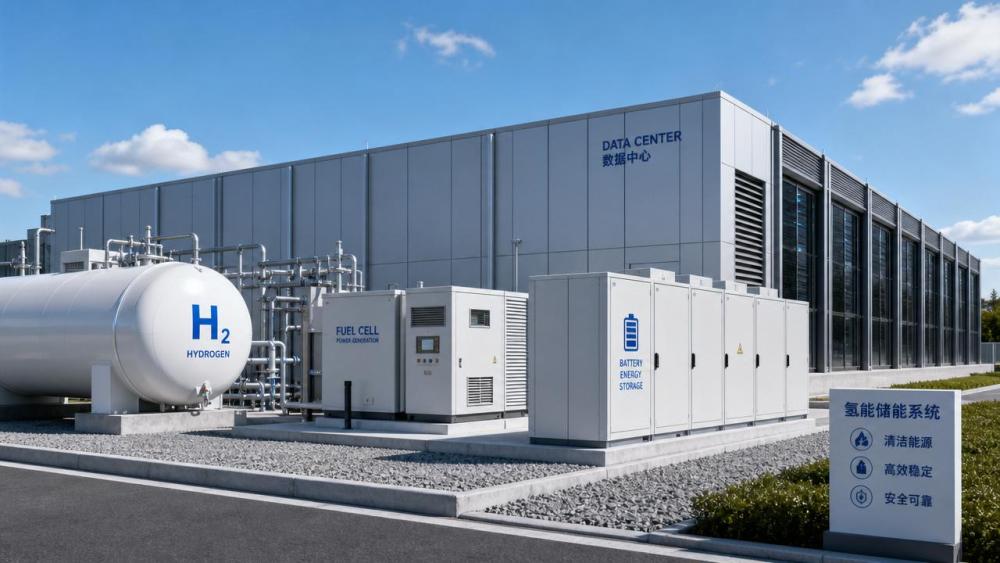
The core search intent behind hydrogen energy storage for data centers is practical, not academic. Leaders want to know whether hydrogen is now reliable enough to support mission-critical operations.
They are also asking where hydrogen fits against diesel backup, lithium-ion batteries, and natural gas microgrids. The real question is not novelty, but bankable performance under outage conditions.
For enterprise decision-makers, the biggest concerns are clear. Will the system protect uptime, satisfy decarbonization goals, control long-term energy risk, and avoid introducing unacceptable safety or compliance exposure?
That means this 2026 reliability check must focus on operating readiness, infrastructure maturity, maintenance realities, economics, and deployment fit. Broad hydrogen theory matters less than decision-grade criteria.
The Short Answer: Hydrogen Is Viable, but Only in Specific Reliability Architectures
In 2026, hydrogen energy storage for data centers is viable for selected use cases, especially where long-duration backup, carbon reduction, fuel diversification, and grid resilience matter more than lowest upfront cost.
However, hydrogen should not be treated as a simple drop-in replacement for every backup system. Reliability depends on system design, fuel logistics, redundancy strategy, and local operational capability.
The strongest deployments pair hydrogen with batteries, advanced controls, and dual-layer backup logic. In this architecture, batteries handle instantaneous ride-through while hydrogen supports extended runtime and lower-emission resilience.
For most organizations, the board-level conclusion is straightforward. Hydrogen is becoming credible for critical power, but only when reliability engineering is prioritized over headline sustainability claims.
Why Data Centers Are Reconsidering Backup Power Now
Several trends are accelerating interest. First, power density continues to rise, especially with AI workloads, liquid cooling, and higher rack loads stressing facility-level electrical design.
Second, grid instability is no longer a regional exception. Extreme weather, transmission bottlenecks, and energy-market volatility are increasing the frequency and business impact of power disruptions.
Third, diesel is under growing pressure. Emissions rules, fuel storage concerns, noise restrictions, and corporate net-zero commitments are making traditional standby strategies harder to defend over long planning horizons.
Fourth, enterprise buyers increasingly need long-duration backup that batteries alone cannot economically provide. This is where hydrogen energy storage for data centers enters the conversation as a strategic option.
What “Reliability” Actually Means for Hydrogen in a Data Center Context
Reliability is often discussed too narrowly. In a data center, it does not mean only whether a fuel cell starts. It means whether the entire power chain performs under real operational stress.
That includes hydrogen production or delivery certainty, storage integrity, pressure management, fuel cell response, power electronics performance, control-system coordination, and maintenance support across the asset lifecycle.
Decision-makers should evaluate at least five dimensions. These are start-up response, runtime endurance, redundancy design, serviceability, and failure containment without broader site disruption.
Hydrogen systems perform best when they are engineered as part of a complete resilience stack. Weakness usually appears not in the chemistry, but in interfaces between storage, conversion, and facility operations.
Where Hydrogen Performs Better Than Diesel or Batteries
Hydrogen has a strong advantage in long-duration energy storage. When runtime requirements extend from several hours to multiple days, batteries become heavier, costlier, and more space intensive.
Compared with diesel, hydrogen can materially improve emissions performance at the point of use, especially when paired with fuel cells rather than combustion-based generation.
Hydrogen also reduces exposure to certain fuel-quality and local air-permitting constraints. For campuses pursuing zero-carbon or low-carbon operating models, that strategic flexibility has significant value.
Another advantage is energy diversification. Enterprises that rely on a single backup fuel face concentration risk. Hydrogen can strengthen resilience when integrated into a broader multi-source energy strategy.
Where Hydrogen Still Faces Reliability Challenges
Despite progress, hydrogen is not frictionless. Storage systems require careful material selection, pressure management, leak detection, and hazard zoning. These are manageable issues, but not trivial ones.
Fuel availability is another challenge. On-site production through electrolysis improves autonomy, yet adds complexity and dependency on water, power quality, and equipment uptime.
Delivered hydrogen can simplify generation infrastructure, but it shifts risk toward logistics, contract structure, and regional supply maturity. Reliability is therefore partly an operational procurement question, not only an engineering one.
There is also a talent issue. Many facility teams understand diesel and batteries deeply. Far fewer have direct experience with hydrogen system maintenance, safety procedures, and emergency response coordination.
The Most Reliable 2026 Deployment Model: Battery Plus Hydrogen
The highest-confidence architecture in 2026 is not battery versus hydrogen. It is battery plus hydrogen, with each technology assigned the role it performs best.
Batteries provide sub-second response, bridge transfer events, and absorb transient load changes. Hydrogen then supplies extended backup duration through fuel cells or hydrogen-capable generation assets.
This layered design improves both resilience and economics. It avoids oversizing battery systems for long-duration events while reducing dependence on diesel for multi-hour or multi-day contingencies.
For executive teams, this is an important decision lens. Hydrogen energy storage for data centers creates the most value when it complements, rather than replaces, existing reliability architecture.
How to Judge Whether a Hydrogen Proposal Is Truly “Mission-Critical Ready”
Buyers should push vendors beyond efficiency claims and decarbonization language. The first question is simple: what service level can the system guarantee during a real outage scenario?
Ask for black-start logic, transition timing, N+1 or 2N design details, mean time to repair assumptions, preventive maintenance intervals, and field performance evidence under comparable load profiles.
Also request clarity on hydrogen storage duration, refueling or replenishment plans, compressor redundancy, spare-parts strategy, and control-system interoperability with existing electrical infrastructure.
If the proposal depends on future fuel supply, future regulations, or unproven maintenance models, the reliability case is weaker than it appears. Mission-critical readiness must be demonstrated, not projected.
Economics: Reliability Value Matters More Than Fuel Cost Alone
Many early evaluations fail because they compare technologies on fuel cost alone. Data center backup decisions should instead weigh avoided downtime, regulatory exposure, carbon strategy, and energy security.
Hydrogen systems often carry higher upfront capital cost than conventional standby solutions. Yet that premium can be justified where outage costs are extreme or where sustainability requirements materially affect market access.
For some operators, the business case strengthens further when hydrogen supports broader campus energy strategy, demand management, or long-term replacement of carbon-intensive backup assets.
Executives should therefore evaluate total resilience value, not only levelized energy cost. In critical infrastructure, the cheapest standby technology is not always the lowest-risk investment.
Best-Fit Use Cases for Hydrogen Energy Storage for Data Centers
Hydrogen is most compelling in hyperscale campuses, edge facilities in weak-grid regions, sovereign digital infrastructure projects, and new-build sites designed around long-term decarbonization goals.
It is also attractive where diesel restrictions are tightening, extended outage risk is rising, or brand and investor pressure requires visible progress toward zero-carbon operations.
New developments generally offer better economics than retrofits because hydrogen systems can be integrated into site layout, hazard planning, electrical topology, and utility strategy from the beginning.
By contrast, small urban facilities with limited space, stable grid access, and short backup duration requirements may find batteries and conventional systems more practical in the near term.
Key Risks Boards Should Address Before Approving Investment
The first risk is assuming all hydrogen is equally low carbon. Decision-makers should distinguish between storage technology value and the upstream emissions profile of supplied hydrogen.
The second risk is underestimating permitting and safety integration. Compliance with recognized frameworks and local authority requirements should be addressed early, not after equipment selection.
The third risk is overreliance on vendor promises without operational proof. Boards should require references, test data, and scenario-based performance validation before committing critical workloads.
The fourth risk is treating hydrogen as a sustainability initiative rather than a resilience asset. If uptime remains the top priority, project governance must be led by critical power requirements first.
A Practical 2026 Decision Framework
Start with business exposure. How costly is downtime, and how likely are extended outages across the target region over the next ten years?
Next, define the runtime gap. If batteries cover only short events but enterprise risk demands many hours or days of backup, hydrogen deserves serious evaluation.
Then assess site readiness. Consider available space, safety perimeter requirements, water and power access, local permitting conditions, and in-house operational capability.
Finally, compare architecture options using resilience outcomes, not isolated components. The right benchmark is full-system reliability under stress, aligned with carbon and energy-security objectives.
Conclusion: Reliability Is Now a Strategic Filter, Not a Technical Footnote
Hydrogen energy storage for data centers has moved beyond pilot-stage curiosity. In 2026, it is a credible option for organizations that need long-duration resilience and lower-carbon infrastructure.
Still, credibility is not universality. Hydrogen is reliable enough for mission-critical use only when deployed in the right architecture, supported by mature operations, and matched to the right risk profile.
For enterprise decision-makers, the takeaway is clear. Do not ask whether hydrogen is promising. Ask whether a specific hydrogen design can outperform your current backup strategy on uptime, risk, and strategic flexibility.
If the answer is yes, hydrogen is no longer an experimental energy story. It becomes a serious infrastructure decision with direct implications for resilience, compliance, and competitive advantage.
Related News
- Hydrogen Energy Storage for Data Centers Gets Costly FastApr 27, 2026Hydrogen energy storage for data centers gets costly fast as hydrogen storage, cryogenic liquid hydrogen, safety standards, and utility-scale power needs reshape the energy transition case. Learn the real trade-offs.
- Hydrogen Energy Storage for Data Centers: Backup Power Options ComparedJun 14, 2026Hydrogen energy storage for data centers compared: see how hydrogen, diesel, batteries, and hybrids perform on uptime, emissions, safety, and long-duration backup.
- Energy Storage Battery Sizing: Key Specs That Affect Runtime and CostJun 14, 2026Energy storage battery sizing affects far more than kWh. Learn how DoD, C-rate, efficiency, temperature, and degradation shape runtime, lifecycle cost, and smarter project decisions.
- Industrial Energy Efficiency Upgrades With the Fastest PaybackJun 07, 2026Industrial energy efficiency upgrades with the fastest payback: discover proven ways to cut power loss, reduce downtime, and improve ROI in hydrogen, CCUS, turbines, and cryogenic systems.
Related News
- 00
0000-00
Hydrogen Energy Storage for Data Centers Gets Costly Fast - 00
0000-00
When 99.999% Hydrogen Purity Still Is Not Good Enough - 00
0000-00
When Does a Hydrogen-Ready Gas Turbine Pay Off? - 00
0000-00
Electricity Price Volatility Is Rewriting Hydrogen Cost Models - 00
0000-00
PSA Recovery Rate Drops for Reasons Operators Miss
Dr. Hideo Torque
Weekly Insights
Stay ahead with our curated technology reports delivered every Monday.