Hydrogen Blending Technology: Key Limits for Gas Turbine Retrofit




Hydrogen blending technology is becoming a realistic route for lowering emissions from existing gas turbine assets without waiting for full greenfield replacement. Yet retrofit success is not defined by a headline blend percentage alone. It depends on combustion dynamics, burner design, material limits, control logic, purge strategy, fuel skid suitability, and emissions compliance. For operators evaluating decarbonization pathways, the real question is simple: where are the hard limits, and how can they be verified before capital is committed?
Why hydrogen blending technology needs a checklist-based retrofit review
A gas turbine retrofit affects several tightly coupled systems at once. Hydrogen changes flame speed, ignition behavior, volumetric energy density, leak risk, and metal exposure conditions. One acceptable change in the fuel stream can create a hidden problem elsewhere.
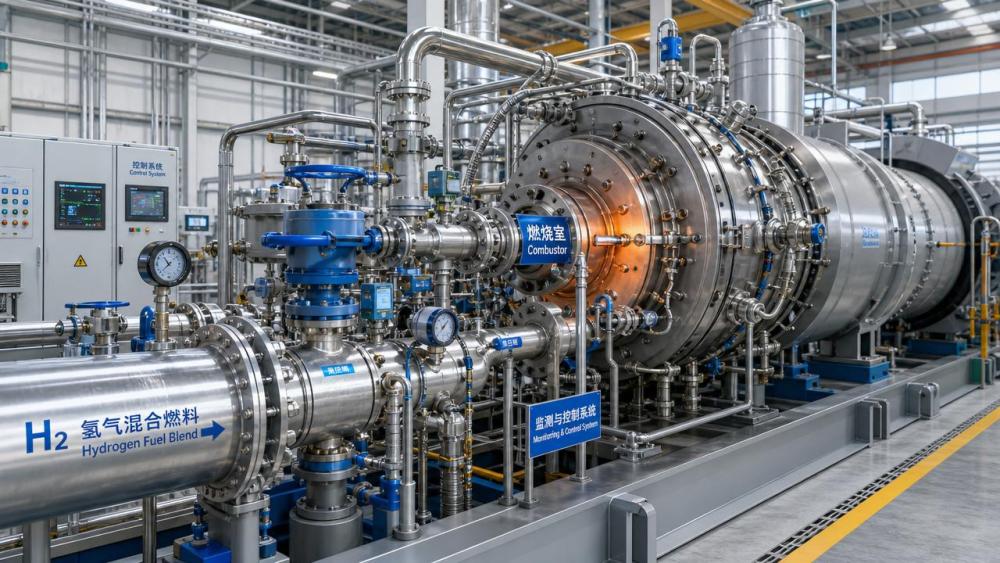
That is why hydrogen blending technology should be screened through a structured checklist. A staged review reduces the chance of overstating blend capability, underestimating NOx excursions, or missing integrity risks in valves, piping, seals, and combustor hardware.
This approach also supports cross-functional decisions in power generation, industrial utilities, and sovereign energy infrastructure programs, where technical proof must align with standards, outage planning, and long-term asset security.
Core checklist: key limits for hydrogen blending technology in gas turbine retrofit
- Verify OEM blend limits first, then compare them with site targets, seasonal fuel variability, and warranty conditions before assuming a higher hydrogen fraction is technically available.
- Assess combustor flame stability under part-load and transient conditions, because hydrogen blending technology often narrows stability margins and increases flashback sensitivity.
- Check Wobbe Index, lower heating value, and volumetric flow impacts, since hydrogen-rich fuel can require larger delivery capacity and revised control valve authority.
- Evaluate burner and premixer geometry for flashback resistance, as higher flame speed can move the flame upstream into hardware not designed for hydrogen service.
- Model NOx formation across the expected operating envelope, because a stable retrofit can still fail if combustion temperatures and residence times drive emissions beyond permit limits.
- Inspect hot-section materials, fuel nozzles, piping, and seals for hydrogen compatibility, with focus on embrittlement, permeability, fatigue life, and differential thermal behavior.
- Confirm fuel gas skid performance, including compressors, regulators, valves, meters, and leak detection devices, under the revised pressure and flow profile.
- Review control logic and protection systems, especially purge timing, trip thresholds, startup sequencing, and combustion dynamics monitoring for mixed-fuel conditions.
- Test pressure drop and linepack effects in upstream infrastructure, because hydrogen blending technology can alter response time and fuel delivery stability during ramping.
- Map applicable codes and standards early, including ASME, ISO, local gas quality rules, and emissions permits, before finalizing the retrofit package.
The practical blend-ratio limit is rarely a single number
Many retrofit discussions start with a percentage target such as 10%, 20%, or 30% hydrogen by volume. In practice, that figure changes with turbine model, combustor generation, ambient conditions, and dispatch profile.
A peaking unit may tolerate one blend level at base load but encounter instability during startup or low-load operation. Therefore, hydrogen blending technology must be qualified across the full operating envelope, not at one favorable test point.
Combustion dynamics often set the first hard boundary
Hydrogen raises laminar flame speed and can intensify pressure oscillations in lean premixed systems. If combustion dynamics rise beyond acceptable thresholds, hardware wear accelerates and unplanned trips become more likely.
This is why hydrogen blending technology assessment should include CFD, rig testing, and site-specific tuning plans. Instrumentation for dynamic pressure monitoring should be treated as essential, not optional.
Application-specific considerations
Utility-scale combined cycle plants
In combined cycle service, hydrogen blending technology affects more than the gas turbine. Changes in exhaust temperature profile can influence HRSG performance, steam conditions, and downstream thermal balance.
Frequent cycling adds another constraint. Units that start and stop regularly face repeated transient exposure, making combustion tuning and component fatigue review especially important.
Industrial cogeneration and refinery-adjacent assets
These sites often have mixed gas streams and more variable fuel quality. Hydrogen blending technology can be attractive here, but gas composition swings may push controls beyond stable tuning ranges.
Integration with process steam demand also matters. If the retrofit changes load-following behavior or maintenance intervals, the wider industrial energy balance can be affected.
Hydrogen-ready sovereign infrastructure programs
At national infrastructure scale, hydrogen blending technology is often part of a phased decarbonization strategy linking electrolysis, storage, transmission, and power generation. In that setting, consistency of standards becomes a central issue.
A turbine may be technically retrofit-ready, yet the project can still stall if pipeline specifications, metering rules, emergency response procedures, and insurance conditions remain unresolved.
Commonly overlooked risks
Ignoring volumetric fuel demand
Hydrogen has lower volumetric energy density than natural gas. A target blend may look modest on paper while still requiring significant increases in flow capacity through piping, valves, and manifolds.
Assuming all metallic components are hydrogen-compatible
Embrittlement risk depends on material grade, stress state, pressure, temperature, and exposure time. Hydrogen blending technology reviews should include a line-by-line material validation, not a generic statement of compatibility.
Underestimating leak management requirements
Hydrogen diffuses quickly and can escape through smaller leak paths than methane. Detection layout, ventilation, hazardous area classification, and isolation philosophy may all need revision.
Treating emissions compliance as a later-stage issue
A retrofit that meets fuel and stability goals can still fail commercially if permit amendments are delayed. NOx, stack testing requirements, and operating envelope declarations should be addressed early.
Execution advice for a credible retrofit pathway
- Start with a screening matrix covering turbine model, combustor type, current fuel specification, control system version, and intended hydrogen source purity.
- Sequence the work from desktop study to materials review, dynamic simulation, OEM consultation, rig validation, and finally site commissioning.
- Define success criteria in advance, including blend ratio, load range, NOx ceiling, trip rate, inspection interval, and maintainable hardware life.
- Use standards-based documentation so the hydrogen blending technology case can withstand technical, regulatory, and investment scrutiny.
Where possible, tie retrofit decisions to the broader hydrogen value chain. Fuel availability, storage method, compression strategy, and pipeline blending policy all shape the final turbine business case.
Conclusion and next-step action guide
Hydrogen blending technology can extend the decarbonization life of existing gas turbine fleets, but only within clearly verified limits. The most important boundaries usually appear in combustion stability, flashback control, NOx performance, fuel delivery capacity, and material integrity.
The next practical step is to build a retrofit dossier for each unit. Include OEM limits, fuel property analysis, materials mapping, controls review, emissions pathway, and standards compliance evidence. That structured package turns hydrogen blending technology from a concept into a defensible execution plan.
Related News
- When Does a Hydrogen-Ready Gas Turbine Pay Off?Apr 27, 2026Hydrogen-ready gas turbine economics explained: evaluate industrial decarbonization, hydrogen blending, hydrogen infrastructure, and utility-scale power ROI to see when future-proof flexibility truly pays off.
- DNV Certifies First Tri-Fuel Marine Gas TurbineJun 15, 2026DNV certifies the first tri-fuel marine gas turbine, enabling hydrogen, ammonia, and natural gas switching. See why this certified option is drawing early orders and reshaping marine procurement.
- Hydrogen Blending Technology in Power Plants: What Improves Efficiency and What Adds RiskJun 15, 2026Hydrogen blending technology in power plants can lower carbon and improve flexibility, but it also raises combustion, materials, and safety risks. See what drives real value.
- Hydrogen Blending Gas Turbine Specifications: Key Limits That Affect Project FeasibilityJun 15, 2026Hydrogen blending gas turbine specifications explained: compare blend limits, NOx, combustor design, controls, and materials risks to assess real project feasibility.
Related News
- 00
0000-00
Hydrogen Energy Storage for Data Centers Gets Costly Fast - 00
0000-00
When 99.999% Hydrogen Purity Still Is Not Good Enough - 00
0000-00
When Does a Hydrogen-Ready Gas Turbine Pay Off? - 00
0000-00
Electricity Price Volatility Is Rewriting Hydrogen Cost Models - 00
0000-00
PSA Recovery Rate Drops for Reasons Operators Miss
Dr. Hideo Torque
Weekly Insights
Stay ahead with our curated technology reports delivered every Monday.