Sustainable Industrial Energy Options for 2026 Hydrogen-Blending Gas Turbines




As 2026 accelerates the shift toward hydrogen-ready power systems, sustainable industrial energy has become a board-level priority for utilities, infrastructure investors, and national energy planners. Hydrogen-blending gas turbines now stand at the center of this transition, linking decarbonization goals with grid reliability, asset integrity, and long-term competitiveness in a rapidly evolving zero-carbon economy.
Yet not every hydrogen-blending project delivers the same value. Fuel flexibility, combustion stability, materials durability, storage logistics, and compliance standards all shape project outcomes. A checklist-based approach helps compare options fast, reduce technical blind spots, and align capital decisions with measurable performance.
Why a Checklist Matters for Sustainable Industrial Energy in 2026
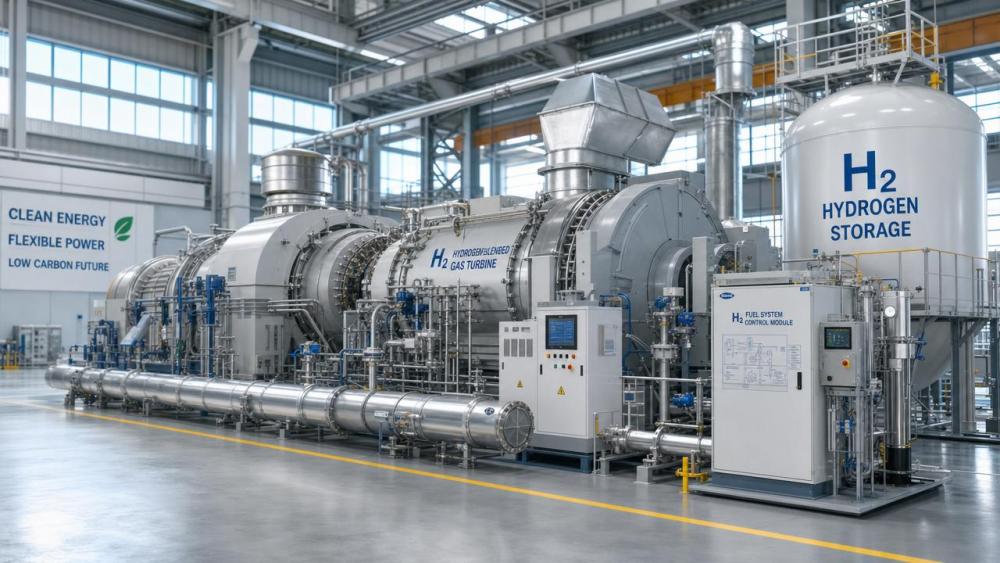
Hydrogen-blending turbines sit inside a wider industrial ecosystem. Electrolysis output, pipeline constraints, CCUS strategy, grid balancing, and outage planning must work together. Without structured screening, even high-efficiency assets can underperform once exposed to variable hydrogen supply and stricter safety requirements.
A practical checklist turns complex engineering questions into an execution sequence. It supports benchmark comparisons across OEM designs, retrofit pathways, site conditions, and international codes such as ISO 19880, ASME B31.12, and related turbine safety frameworks.
Core Checklist for Hydrogen-Blending Gas Turbine Evaluation
- Define target hydrogen blending ratios early, then verify whether the turbine can sustain expected loads without unstable flame behavior, derating penalties, or unacceptable NOx emissions.
- Check fuel system material compatibility, especially valves, seals, piping, and compressor interfaces exposed to hydrogen embrittlement, leakage risks, or frequent thermal cycling.
- Validate combustion control architecture, including sensors, digital twins, and fast-response tuning tools that maintain efficiency when fuel composition changes across daily operations.
- Assess upstream hydrogen source quality, pressure, and continuity so the turbine does not depend on fuel streams with inconsistent purity, moisture levels, or intermittent delivery.
- Compare retrofit scope against greenfield design advantages, including downtime windows, balance-of-plant modifications, burner replacement needs, and long-term maintenance implications.
- Review emissions strategy in full, not only carbon reduction, because sustainable industrial energy projects must also address NOx control, permitting thresholds, and local air-quality rules.
- Confirm integration with storage and transport infrastructure, whether pipelines, tube trailers, or cryogenic systems, to avoid bottlenecks between hydrogen production and turbine dispatch.
- Measure operational flexibility, including ramp rates, spinning reserve capability, black-start potential, and compatibility with renewable intermittency in power-intensive industrial regions.
- Benchmark lifecycle cost rather than headline efficiency alone, factoring hydrogen price volatility, inspection intervals, spare parts exposure, and expected asset life extension.
- Verify compliance readiness across safety, pressure systems, hazardous area design, and operator training so commissioning is not delayed by late-stage regulatory gaps.
Quick Comparison Table
Application Scenarios That Change the Decision
Grid Support and Utility Peaking
For grid-balancing applications, sustainable industrial energy depends on fast starts and stable operation during renewable volatility. Hydrogen-blending turbines must respond quickly without combustion trips when solar or wind output changes within minutes.
In this scenario, control software and fuel conditioning often matter more than maximum hydrogen percentage. A lower blend rate with superior operational stability can outperform an aggressive blend target that causes dispatch uncertainty.
Industrial Campuses and Captive Power
Refineries, chemical sites, metals processing facilities, and export terminals usually prioritize steam balance, heat integration, and outage discipline. Here, sustainable industrial energy must support process continuity as well as emissions reduction.
Hydrogen availability may come from on-site electrolysis or by-product streams. The turbine choice should match actual purity ranges, compression capacity, and maintenance access rather than theoretical fuel specifications alone.
National Infrastructure and Energy Security Programs
Where projects support sovereign decarbonization goals, the decision expands beyond plant efficiency. Planners must examine strategic storage, domestic manufacturing compatibility, standards alignment, and resilience against import disruptions.
In these cases, sustainable industrial energy is evaluated as a system asset. Hydrogen-blending turbines become part of a broader zero-carbon backbone that includes electrolysis, logistics, and high-integrity transmission networks.
Commonly Overlooked Risks
- Assuming future hydrogen supply will automatically scale on schedule. Delayed electrolyzer deployment or transport capacity can strand turbine capability and weaken the sustainable industrial energy business case.
- Focusing only on turbine hardware while ignoring balance-of-plant upgrades. Metering, blending skids, pressure reduction, purge systems, and hazard detection often control project readiness.
- Using generic natural gas maintenance intervals. Hydrogen service can alter wear patterns, inspection frequency, and component replacement planning across hot-gas-path equipment.
- Treating standards compliance as a documentation step. In practice, material traceability, operator procedures, and emergency isolation logic should be designed into the asset from day one.
Practical Execution Recommendations
Start with a staged blend roadmap. Define near-term, mid-term, and full-scale hydrogen thresholds tied to fuel contracts, electrolyzer milestones, and turbine upgrade packages. This reduces stranded capital and supports realistic commissioning plans.
Run a cross-discipline integrity review before vendor shortlisting. Include combustion engineers, storage specialists, piping experts, digital controls teams, and safety reviewers. Sustainable industrial energy projects fail most often at integration points, not at brochure specifications.
Use performance benchmarks that combine heat rate, emissions, outage history, hydrogen tolerance, and compliance maturity. A single efficiency metric cannot capture the operational value of hydrogen-ready assets in 2026.
Model downside cases as carefully as upside cases. Test lower hydrogen purity, seasonal demand shifts, delayed storage expansion, and stricter NOx limits. Bankable sustainable industrial energy decisions require resilience under imperfect conditions.
Conclusion and Next-Step Action Guide
Hydrogen-blending gas turbines are no longer a future concept. They are a practical pillar of sustainable industrial energy for power systems that need lower carbon intensity without sacrificing reliability or strategic flexibility.
The strongest 2026 projects will not be chosen by headline claims alone. They will be selected through disciplined evaluation of blend capability, infrastructure fit, materials integrity, emissions behavior, and standards compliance across the full asset lifecycle.
Use the checklist above to screen candidates, rank retrofit versus greenfield pathways, and identify hidden constraints before procurement or final investment approval. That approach turns sustainable industrial energy from a policy ambition into an executable industrial platform.
Related News
- When Does a Hydrogen-Ready Gas Turbine Pay Off?Apr 27, 2026Hydrogen-ready gas turbine economics explained: evaluate industrial decarbonization, hydrogen blending, hydrogen infrastructure, and utility-scale power ROI to see when future-proof flexibility truly pays off.
- DNV Certifies First Tri-Fuel Hydrogen-Ammonia Gas TurbineJun 18, 2026DNV certifies the first tri-fuel hydrogen-ammonia gas turbine, marking a key step for ship power and distributed energy. Explore its compliance scope, fuel-switching capability, and market impact.
- DNV Certifies First Tri-Fuel Marine Gas TurbineJun 15, 2026DNV certifies the first tri-fuel marine gas turbine, enabling hydrogen, ammonia, and natural gas switching. See why this certified option is drawing early orders and reshaping marine procurement.
- Hydrogen Blending Technology in Power Plants: What Improves Efficiency and What Adds RiskJun 15, 2026Hydrogen blending technology in power plants can lower carbon and improve flexibility, but it also raises combustion, materials, and safety risks. See what drives real value.
Related News
- 00
0000-00
Hydrogen Energy Storage for Data Centers Gets Costly Fast - 00
0000-00
When 99.999% Hydrogen Purity Still Is Not Good Enough - 00
0000-00
When Does a Hydrogen-Ready Gas Turbine Pay Off? - 00
0000-00
Electricity Price Volatility Is Rewriting Hydrogen Cost Models - 00
0000-00
PSA Recovery Rate Drops for Reasons Operators Miss
Dr. Hideo Torque
Weekly Insights
Stay ahead with our curated technology reports delivered every Monday.