LCOH Reduction Trends: Which Levers Still Move the Needle in 2026




As 2026 reshapes project economics across the hydrogen value chain, LCOH (Levelized Cost of Hydrogen) reduction trends are no longer driven by headline CAPEX cuts alone. For decision-makers benchmarking sovereign-scale infrastructure, the real question is which levers still deliver material cost declines—power pricing, electrolyzer utilization, logistics optimization, or financing structure. This article examines where meaningful gains remain and where cost reduction narratives are losing traction.
What LCOH reduction trends actually measure in 2026
LCOH, or Levelized Cost of Hydrogen, is the full-life cost of producing hydrogen divided by the total hydrogen output over the asset’s operating life. In practical terms, it compresses electricity cost, electrolyzer CAPEX, stack replacement cycles, water treatment, balance-of-plant efficiency, maintenance, compression, storage, transport, and financing into a single benchmark. That is why LCOH reduction trends matter so much to ministries, infrastructure planners, utility CTOs, and investment directors: they offer a common lens for comparing projects that may use very different technologies, geographies, and offtake models.
However, the benchmark is often misunderstood. A lower quoted electrolyzer price does not automatically translate into a lower delivered hydrogen cost. In 2026, the strongest LCOH reduction trends are increasingly shaped by system-level performance rather than equipment price alone. This is especially true for large hydrogen hubs linked to export terminals, power generation, heavy industry, and hydrogen refueling infrastructure, where losses and constraints accumulate across the value chain.
Why the industry remains focused on this metric
The hydrogen sector has moved beyond early-stage optimism. Today, sovereign-scale projects are being tested against stricter return thresholds, grid integration realities, and international compliance standards. For organizations operating in advanced segments such as megawatt-scale electrolysis, cryogenic liquid hydrogen logistics, hydrogen-ready gas turbines, CCUS-linked industrial clusters, and 70 MPa refueling systems, cost credibility now matters as much as technology credibility.
This is where LCOH reduction trends become strategically important. They help stakeholders distinguish between cost improvements that are durable and those that depend on temporary subsidies, optimistic capacity factors, or incomplete logistics assumptions. In other words, the metric is no longer just a modeling tool; it is a governance tool for capital allocation, infrastructure sequencing, and national energy security planning.
The major levers and how much influence they still have
In 2026, several levers still influence LCOH (Levelized Cost of Hydrogen) reduction trends, but their relative power is changing. The easiest gains have already been captured in many mature project models. What remains are more operational, contractual, and financing-based improvements that require disciplined execution.
The table makes one point clear: the strongest remaining levers are not always hardware levers. They are often commercial and operational levers embedded in project design, grid access, offtake quality, and infrastructure integration.
Which levers still move the needle the most
1. Power pricing remains the primary lever
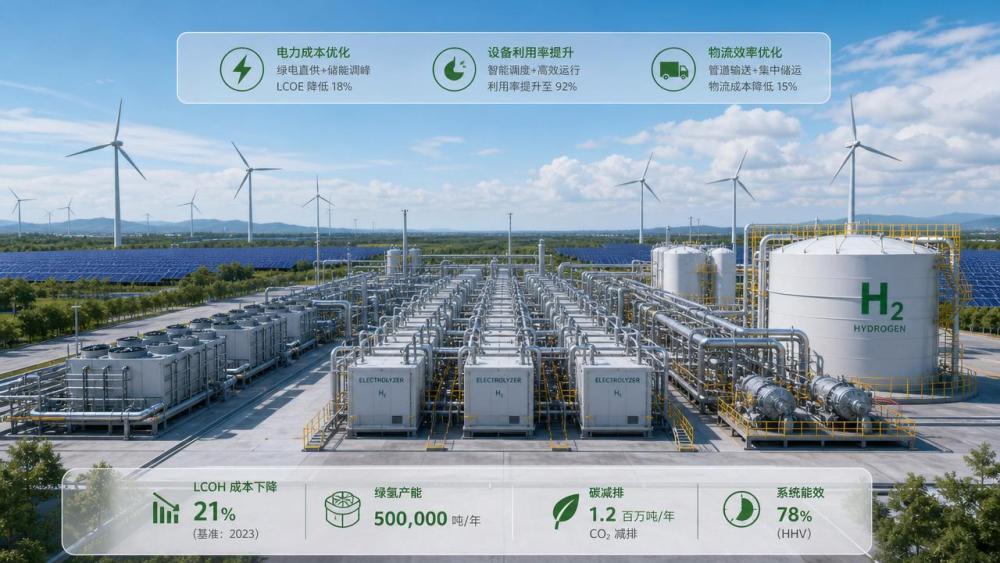
Among all LCOH reduction trends, electricity procurement remains the most decisive. Even where electrolyzer prices have softened, projects with poor power economics struggle to compete. The critical issue is not simply the lowest nominal tariff. It is the total power strategy: time-of-use exposure, curtailment risk, renewable matching rules, grid fees, balancing costs, and the flexibility of the asset to capture low-cost hours without excessive idle time.
For many projects, the best path is a hybrid energy portfolio combining dedicated renewables, grid-linked optimization, and storage or dispatch flexibility. That is more complex than the early “cheap solar equals cheap hydrogen” narrative, but it reflects reality in 2026.
2. Utilization quality matters more than utilization headline numbers
High utilization reduces fixed cost per kilogram, yet not all operating hours are equally valuable. Projects that cycle too aggressively may face stack degradation, lower efficiency, and more maintenance events. This means the best-performing assets are not necessarily those with the highest runtime, but those with the best balance between run hours, efficiency, and equipment longevity.
For benchmark-focused institutions such as G-HEI, this is a key distinction. Evaluating electrolyzer fleets requires asset-level analysis of stack health, dynamic response, water purity management, thermal control, and downtime behavior, not just annual production totals.
3. Logistics optimization now separates plant-gate cost from delivered cost
A growing share of hydrogen economics is being determined after production. Compression, liquefaction, boil-off management, pipeline blending limits, storage pressure, and transfer losses can erase upstream gains. This is particularly relevant for export-oriented liquid hydrogen corridors and for high-pressure mobility applications governed by standards such as ISO 19880 and SAE J2601.
As a result, one of the most important LCOH (Levelized Cost of Hydrogen) reduction trends is the shift from isolated plant modeling to full-chain modeling. A project with a slightly higher production cost may still deliver lower end-use hydrogen cost if its logistics architecture is better aligned with demand density and infrastructure standards.
4. Financing structure is becoming a stronger differentiator
The capital market environment of 2026 has made financing quality central to project viability. Hydrogen assets are still perceived as carrying execution and demand risk, which can raise debt margins and equity return expectations. Better offtake agreements, stronger sovereign backing, phased deployment, and proven engineering standards can materially lower risk premiums.
This means financing is no longer a downstream detail. It is a front-end design variable. In many cases, a stronger contract stack can improve LCOH more than another incremental equipment discount.
Where cost reduction stories are losing momentum
Some narratives around LCOH reduction trends are becoming less persuasive. First, blanket assumptions about continuous electrolyzer CAPEX collapse are no longer sufficient. Price competition has increased, but system integration, durability, and replacement economics now carry more weight than nameplate equipment cost alone.
Second, generic scale-up claims can be misleading. Bigger plants do not always produce cheaper hydrogen if transmission upgrades, water sourcing, grid congestion, or downstream logistics are unresolved. Third, subsidy-led economics can distort true competitiveness if policy support is uncertain, temporary, or conditional on strict carbon accounting methodologies.
In short, the market is rewarding realism. Durable LCOH reduction trends are increasingly tied to engineering discipline, infrastructure fit, and contract architecture rather than promotional assumptions.
Who gains the most from understanding these trends
Different stakeholders use the same LCOH framework for different decisions. Understanding those use cases helps prevent oversimplified benchmarking.
Practical evaluation principles for 2026 project benchmarking
For researchers and decision-makers assessing LCOH (Levelized Cost of Hydrogen) reduction trends, several principles stand out. First, always separate plant-gate hydrogen cost from delivered hydrogen cost. A low production number without transport and conditioning assumptions has limited decision value.
Second, evaluate utilization using real dispatch logic rather than static annual averages. Third, stress-test degradation, replacement intervals, and maintenance assumptions under realistic operating conditions. Fourth, compare projects using a consistent treatment of financing, tax incentives, carbon accounting, and compliance obligations. Finally, benchmark infrastructure interfaces carefully, especially where hydrogen must meet demanding safety and integrity standards such as ASME B31.12 or integrate with cryogenic and high-pressure systems.
These principles are especially relevant for multidisciplinary platforms like G-HEI, where technical benchmarking is inseparable from infrastructure sovereignty, asset security, and long-duration system performance.
Common scenarios where the analysis changes
LCOH reduction trends do not affect every hydrogen pathway in the same way. In grid-connected electrolysis, power market volatility may dominate. In dedicated renewable projects, utilization and oversizing strategy may matter more. In liquid hydrogen export chains, liquefaction energy and boil-off control can become critical. In hydrogen-ready gas turbine systems, the economics may depend on blending strategy, storage duration, and dispatch value. In refueling networks, station throughput and high-pressure compression can outweigh small upstream cost gains.
That is why the most credible assessments are scenario-specific. Broad averages are useful for orientation, but investment-grade conclusions require chain-specific modeling tied to end use.
FAQ
Are electrolyzer CAPEX cuts still important?
Yes, but they are no longer the only major story. In many 2026 models, power cost, utilization quality, and financing can have equal or greater influence on LCOH reduction trends.
What is the biggest mistake in LCOH benchmarking?
Treating hydrogen production cost as if it were the same as delivered hydrogen cost. Logistics, compression, storage, and compliance can materially change the economics.
Why does financing matter so much now?
Because hydrogen projects remain capital intensive, and risk pricing has become stricter. Better offtake quality and stronger technical assurance can lower the weighted cost of capital and improve project economics.
A grounded view of the next cost frontier
The most important lesson from current LCOH reduction trends is that the next frontier is not a single silver bullet. It is disciplined integration across power sourcing, electrolyzer operation, logistics design, and financing structure. For strategic stakeholders navigating the hydrogen transition, the market now rewards projects that are technically rigorous, standards-aligned, and modeled across the full chain rather than only at the production asset.
If your organization is evaluating large-scale electrolysis, hydrogen logistics, turbine integration, CCUS-linked hydrogen systems, or high-pressure fueling infrastructure, a benchmark-driven review of the real cost levers can help identify where further savings are still achievable—and where assumptions should be challenged before capital is committed.
Related News
- How Much Turndown Ratio Matters in Large-Scale ALK SystemsMay 17, 2026Alkaline electrolyzer turndown ratio shapes uptime, flexibility, and hydrogen project returns. Learn how scenario-fit turndown targets improve ALK performance and bankability.
- Electrolyte Concentration (KOH): Best Range for ALK Efficiency and SafetyMay 16, 2026Electrolyte concentration (KOH) directly impacts ALK efficiency, corrosion, and safety. Discover the best operating range, warning signs, and practical tips to optimize hydrogen output.
- Gas-Liquid Separator Capacity: Early Signs Your Electrolyzer Is UndersizedMay 16, 2026Gas-liquid separator capacity issues can quietly undermine electrolyzer performance. Spot early warning signs, reduce moisture carryover, and protect hydrogen system efficiency.
- Feedwater Deionization Conductivity Limits for Stable ALK OperationMay 16, 2026Feedwater deionization conductivity limits explained for stable ALK operation. Learn target ranges, alert bands, and monitoring tips to reduce contamination risk and improve hydrogen reliability.
Related News
- 00
0000-00
Hydrogen Energy Storage for Data Centers Gets Costly Fast - 00
0000-00
When 99.999% Hydrogen Purity Still Is Not Good Enough - 00
0000-00
When Does a Hydrogen-Ready Gas Turbine Pay Off? - 00
0000-00
Electricity Price Volatility Is Rewriting Hydrogen Cost Models - 00
0000-00
PSA Recovery Rate Drops for Reasons Operators Miss
Dr. Aris Aero
Weekly Insights
Stay ahead with our curated technology reports delivered every Monday.